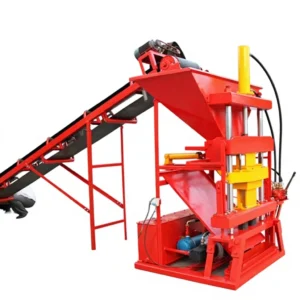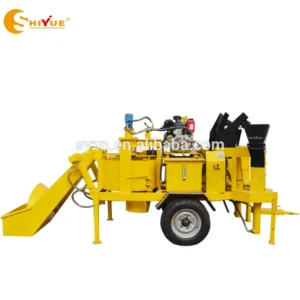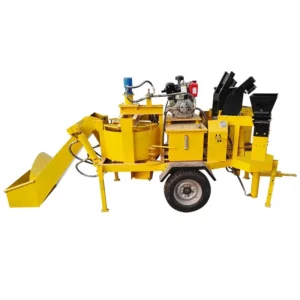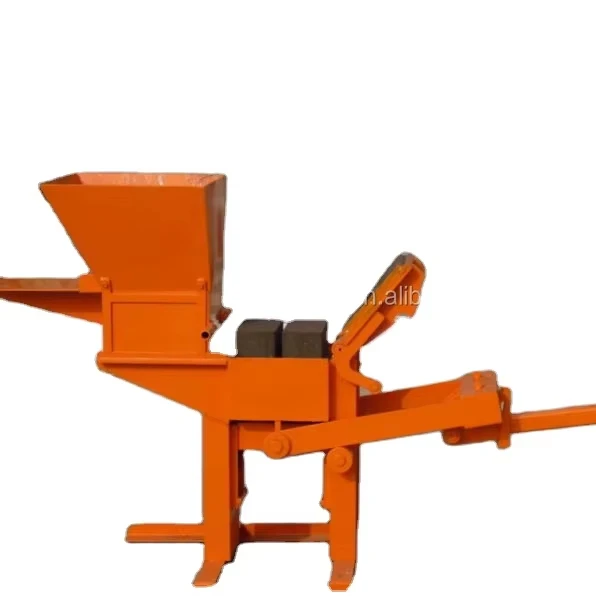
Integrated Line Logic — the press, mixer and curing flow are matched as one system, so a 30–40 second cycle never waits on upstream material.
Technical Specifications
| Parameter | Value |
|---|---|
| Model | LY2-40 |
| Product Type | Manual Clay Interlocking Brick Making Machine |
| Operation Mode | Completely Manual, No Power Required for Press |
| Lifting System | Manual Lever |
| Mobility | Steel Wheels |
| Molding Cycle | 30–40 seconds |
| Daily Output | 400–1,000 pieces per day (basis not stated in source — confirm block format, material and wall thickness) |
| Overall Dimensions | 1600 × 700 × 1200 mm |
| Total Mass | 200–240 kg |
| Mould Change | Changeable for various interlocking formats |
| Recommended Mixer | JFA-1 Mixer or JQ350 Mixer |
| Warranty | 1 Year |
Application Suitability
| Application | Material or Output |
|---|---|
| Off-grid interlocking brick plants | Local soil blended with cement, no grid power needed for the press station |
| Remote construction site production | Compressed earth blocks using site-excavated soil |
| Community-scale building projects | Solid and interlocking formats from a single manual line |
| Contractor self-supply on housing developments | Earth-cement bricks cured in open yard adjacent to the press |
What "400 to 1,000 Pieces per Day" Leaves Out on a Manual Line
Capacity numbers mean nothing without the block format, mix moisture and operator rhythm stated next to them.
I once watched a contractor in Iraq receive a manual clay interlocking brick machine production line and start pressing earth blocks before the soil moisture was anywhere near what the trial samples showed. The interlocking tabs cracked on ejection, the mixer discharge could not keep up with the press rhythm, and the whole crew spent two weeks adjusting rather than producing. The press itself was fine — the line around it was mismatched [NEED_CITE: field adjustment records for manual earth block lines in arid climates]. Quotations that list only the press leave the buyer to discover these gaps on site, where each hour of downtime costs labour and cement.
Matching Mixer Throughput to the Press Rhythm
The LY2-40 completes a cycle every 30–40 seconds. If the JFA-1 or JQ350 mixer cannot discharge a batch within that window, the press sits idle and daily output collapses. A manual clay interlocking brick machine production line only reaches its quoted volume when the mixer, material staging area and press station are laid out so that a fresh charge is ready before the operator opens the mould. This is why we pair the mixer model to the target block format and soil type before confirming the line layout.
Station Flow from Soil Stockpile to Curing Yard
Material moves through four zones: soil screening and cement dosing, mixing, pressing and initial set, then curing. Each zone must be sized for the next. If the curing yard is too small, freshly pressed blocks stack up around the press and the operator loses access to the mould. The steel wheels on the LY2-40 allow repositioning as the yard fills, but only if the layout was planned with that movement in mind [NEED_CITE: manual block line yard layout and station spacing guidelines].
Reading the Specs That Actually Matter
The 200–240 kg total mass keeps the machine portable across a site, yet heavy enough to resist shifting during lever compression. The 1600 × 700 × 1200 mm footprint is compact enough to fit inside a temporary shelter when rain threatens, which matters for earth blocks that cannot be pressed wet. Mould changeability across interlocking formats gives a single station the flexibility to produce both wall blocks and column halves, provided the change-over time fits within the shift plan. The zero-power press design means the entire manual clay interlocking brick machine production line can run on a site where only the mixer draws electricity from a generator.
The Hidden Cost of Treating the Press as a Stand-Alone Purchase
Buyers who order the press without specifying the mixer, pallet arrangement and curing area end up hand-carrying every block from mould to yard. On a site producing hundreds of units daily, that unpriced labour eclipses the machine cost within weeks. Worse, soil moisture tested at one level during inquiry often shifts once excavation reaches a different stratum, and without a line-level mix adjustment plan the interlocking joints fail to lock [NEED_CITE: compressed earth block strength variation with soil moisture content]. The result is a line that technically runs but produces scrap.
Why Source the Complete Line Here
Block machinery is the only product category we handle, so the press, mould, pallet and mixer are specified together rather than assembled from separate catalogues. Soil samples from the buyer’s site are tested against target block strength before the mixer model is confirmed. Mould drawings cover the interlocking formats the buyer’s local market actually sells. The line layout states daily output per format, not a single optimistic number. Automation level is selectable, so a buyer can start fully manual and add pallet handling later without replacing the press.
Documentation & Verification
- Line layout drawing showing station spacing and material flow for your block format
- Capacity calculation stating the interlocking format and soil-cement ratio assumed
- Mixer spec sheet confirming batch discharge time matches the 30–40 second press cycle
- Mould drawing set covering every interlocking profile in your product range
- Factory test record on your soil sample before dispatch
Installation, Commissioning & Support
- Ground levelling plan for the 1600 × 700 mm press footprint to prevent mould misalignment
- Generator sizing for the recommended JFA-1 or JQ350 mixer where grid power is absent
- On-site commissioning with soil moisture adjustment across the full mixer-press cycle
- Operator training on mould change procedure and lever technique for consistent compaction
- Wear parts list covering mould liners and lever pivot bushings for first-year maintenance
What to Include with Your Inquiry
Tell us the interlocking brick format your market sells, the soil type on your project site and whether grid power is available for the mixer. Include your target daily output and the curing space you can allocate so we can confirm the manual clay interlocking brick machine production line layout before quoting. If you have a soil sample available, send it for mix testing before the line is finalised.
Frequently Asked Questions
Q: How is daily capacity calculated and which brick format is assumed?
A: The 400–1,000 pieces per day figure depends on the interlocking block dimensions, soil-cement ratio and operator shift length. We calculate capacity per format and state the assumed mix and cycle time so the number reflects what your crew will actually produce on site.
Q: How do I match the mixer output to the LY2-40 cycle so the press is not idle?
A: The JFA-1 or JQ350 mixer is selected based on batch volume and discharge speed relative to the 30–40 second press cycle. We confirm mixer throughput against your target format before the line layout is issued, so material is always ready when the operator opens the mould.
Q: What curing area and pallet arrangement does this manual line require?
A: Earth blocks need shade and moisture control during curing. The line layout specifies yard dimensions based on your daily output and block format, with pallet staging zones that keep pressed units accessible and protect interlocking tabs from damage.
Q: Can the line be upgraded to semi-automatic pallet handling later?
A: The LY2-40 press is designed as a standalone manual station. Upgrading to semi-automatic pallet feeding and stacking is possible by adding line equipment around the press, though the manual lever operation itself remains unchanged.
Q: What site conditions does the line layout assume?
A: We plan for level compacted ground, shade structures over the curing zone, and water access near the mixer for soil moisture adjustment. Where grid power is unavailable, the layout accounts for generator placement relative to the mixer station.