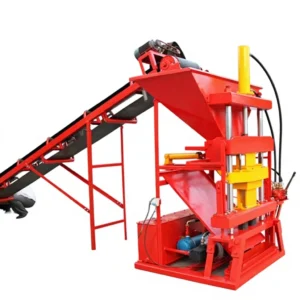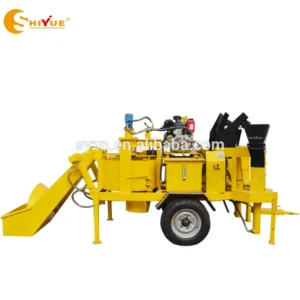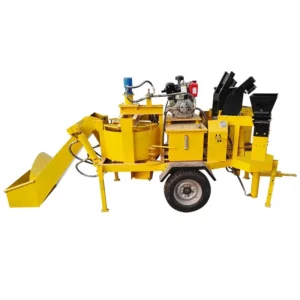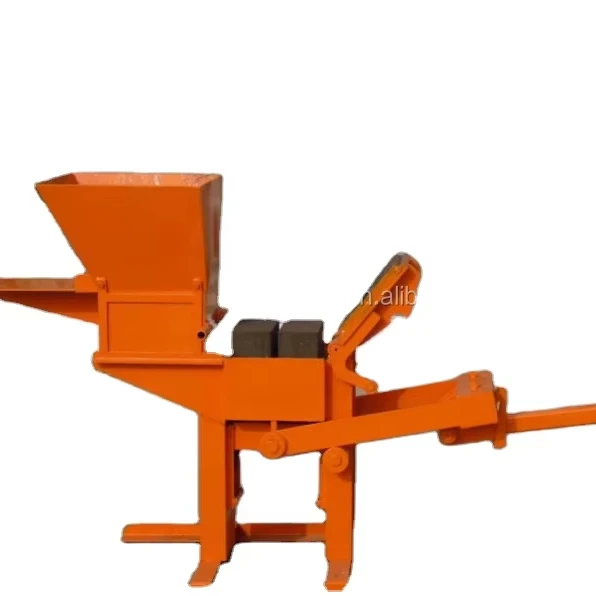
Mould and Press Alignment — The LY2-40 is specified with mixer, pallet and handling stations so the clay interlocking brick machine production line runs without bottleneck at any single point.
Technical Specifications
| Parameter | Value |
|---|---|
| Model | LY2-40 |
| Product Type | Manual Clay Interlocking Brick Making Machine |
| Operation Mode | Completely Manual, No Power Required |
| Lifting System | Hand Operate |
| Mobility | Steel wheels (mobile) |
| Mould Change | Changeable for various blocks |
| Overall Dimensions (L×W×H) | 1600 × 700 × 1200 mm |
| Net Weight | 200–240 kg (basis to be confirmed) |
| Molding Cycle | 30–40 s |
| Daily Output Capacity | 400–1000 pcs/day (basis not stated in source) |
| Total Power | No Power, Completely Manual |
| Recommended Mixer | JFA-1 Mixer or JQ350 Mixer |
| Warranty | 1 Year |
Application Suitability
| Application | Material or Output |
|---|---|
| Off-grid block production sites | Soil-cement blends without electricity access |
| Small-scale clay interlocking brick plants | Local soil mixed with cement for interlocking formats |
| On-site construction block making | Housing and development project zones with limited infrastructure |
| Manual or automated mix feeding | Homogenised soil-cement feed from JFA-1 or JQ350 mixer |
What the Quoted Cycle Time Actually Means for Your Output
A 30–40 second molding cycle only tells half the story; the real throughput depends on how fast material arrives and pallets move away.
Many buyers receive a cycle rate with no block format attached, then discover that the daily volume falls well short of what was expected once the mixer feed rate, pallet handling speed, and curing area capacity are factored in. I have walked onto sites where a manual press sat idle for minutes between cycles simply because the upstream mixer could not deliver a fresh batch in time. When planning a clay interlocking brick machine production line, every station must be calculated against the specific block format you intend to sell [NEED_CITE: capacity calculation methods for manual block presses].
Raw Material Feeding and Mixer Integration
A manual press like this one depends entirely on consistent material delivery. The recommended JFA-1 or JQ350 mixer is sized to keep the LY2-40 fed without overproduction piling up on the curing floor. Soil-cement blends must reach the mould with uniform moisture and particle distribution; otherwise, block density varies from one end of the pallet to the other. Positioning the mixer at the correct height and distance from the press reduces the time operators spend transporting material by hand.
Pallet Handling and Curing Area Flow
Without powered conveyors, pallet movement sets the pace for the entire clay interlocking brick machine production line. Operators must place an empty pallet, load the mix, operate the hand lever, remove the filled pallet, and carry it to the curing zone before the next cycle begins. The curing area must sit within a practical walking distance, and pallet dimensions must match the racking or ground space already available on site. Any mismatch here creates a backlog that the press cycle time alone cannot predict [NEED_CITE: manual block line layout planning guides].
Reading the Specs That Matter Most
The 1600 × 700 × 1200 mm frame footprint keeps the machine compact enough to relocate on its steel wheels between production zones, which matters for contractors moving between building sites. The 30–40 second molding cycle is achievable when the operator has a steady material supply and empty pallets at hand; any delay in either input stretches the real cycle considerably. The changeable mould design allows different interlocking block formats on the same frame, but each format change requires manual adjustment and test cycles before full production resumes. The 200–240 kg weight (basis to be confirmed) keeps the machine stable during pressing while still allowing two workers to reposition it when needed.
The Cost of Ignoring Line Balance
When the mixer output does not match the press appetite, operators stand idle and daily volume drops regardless of how fast the machine can theoretically cycle. Pallets that do not fit the buyer’s existing curing racks force a second handling step that doubles labour around the press. Mould formats chosen without checking local market demand leave the buyer producing blocks that sit unsold. These are not machine faults; they are line specification errors made before the equipment left the factory [NEED_CITE: block production line planning common errors].
Why Source the Full Line Here
Block machinery is the single focus of our engineering work, so the LY2-40 is never quoted as a standalone press. The mixer, pallet specification, and handling method are confirmed together against your local soil-cement mix and curing conditions. Mould options are selected for the interlocking formats your market actually buys, with custom drawings available if your buyers require a non-standard profile. The automation level starts fully manual here, but the line layout can accommodate powered feeding and stacking as your volume grows. Factory testing covers the complete sequence before dispatch, not just the press in isolation.
Documentation & Verification
- Line layout drawing showing mixer-to-press material flow distance and pallet path
- Capacity calculation sheet stating the interlocking block format assumed for daily output
- Mould drawing and format list confirming profiles available for your market
- Pallet specification matched to your existing curing racks and transport method
- Operation manual covering mould change procedure and daily maintenance intervals
- Factory test record on your specified soil-cement blend before dispatch
Installation, Commissioning & Support
- Site preparation requires level ground within the 1600 × 700 mm footprint, no foundation bolts needed
- Zero electrical connections required; the press operates entirely by hand lever
- Mixer power supply must match local voltage and frequency, confirmed before build
- First production run supervised to set molding cycle rhythm with your operators
- Mould change training included so format switches do not consume a full shift
- Wear parts list provided with initial spare set for mould liners and lever pivots
Tell Us About Your Project
To configure the right line around the LY2-40, share the interlocking block format you need, the soil type available on your site, and whether grid power exists for the mixer. Let us know your curing area dimensions and the pallet size you already use. If you are working to a project deadline, tell us the required start date so we can confirm dispatch timing.
Frequently Asked Questions
Q: How is daily output verified and which interlocking block format does the capacity figure assume?
A: The 400–1000 pcs/day figure (basis not stated in source) must be confirmed against your specific block dimensions and soil-cement mix. We provide a capacity calculation sheet that states the exact format, wall thickness, and mix design used, so you know what throughput to expect before the machine ships.
Q: What mixer and raw material feeding setup completes the production line around the LY2-40?
A: The JFA-1 or JQ350 mixer is recommended to homogenise soil-cement blends at a rate matching the manual press cycle. Material feeding between mixer and press is done by hand, so we calculate the optimal distance and height to keep operator effort and cycle time within practical limits.
Q: How does manual pallet handling affect the line cycle time and realistic throughput?
A: Each cycle includes placing an empty pallet, filling the mould, pressing, and carrying the filled pallet to the curing zone. The real throughput depends on pallet size, curing area distance, and operator count. We factor all three into the line layout before quotation.
Q: What local soil and cement mix design is compatible with this machine’s moulding pressure?
A: The hand-operated lever generates a fixed molding force suited to soil-cement blends within a specific moisture and clay content range. We request a sample of your local soil and run a test at the factory to confirm block strength before finalising the mix ratio recommendation.
Q: How do mould change times affect format flexibility across a multi-product block line?
A: Each mould swap on the LY2-40 requires manual removal, alignment of the new mould, and test cycles to verify block dimensions. We train your operators on the procedure and include a format change schedule in the manual so multi-format production days can be planned efficiently.