Natural vs Steam Curing for Concrete Blocks: Which Method Delivers Higher ROI for Your China-Sourced Production Line?
Steam curing is not always more expensive — in fact, at volumes above 10,000 blocks per day, it often costs 15–25% less per unit than natural curing once you factor in mold turnover, land use, and waste rates.
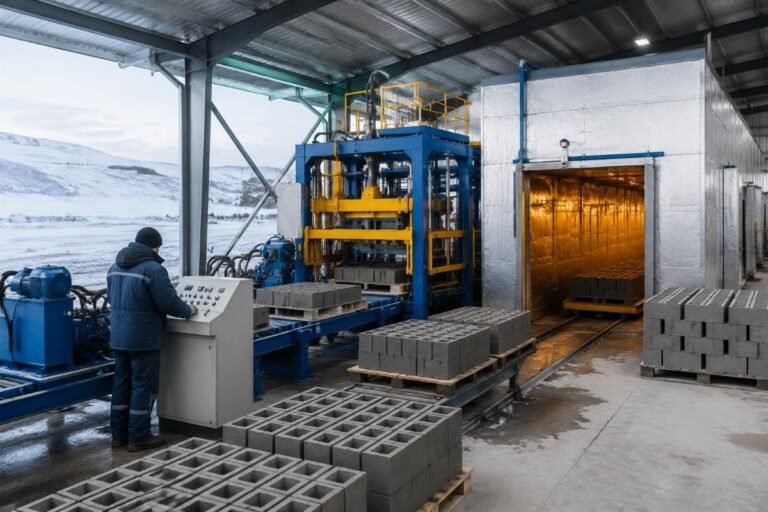
Steam curing can cut production cycles by up to 70% and achieve 28-day compressive strength within 8–12 hours, making it the superior choice for medium-to-large operations in cold or variable climates; however, natural curing remains the most cost-effective option for small-scale startups in consistently hot and humid regions where capital is limited and land is abundant.
Over the past decade of supplying block production lines to more than 108 countries, we have seen firsthand how the curing decision — not the block machine itself — often determines whether a factory hits its ROI target or bleeds cash through hidden inefficiencies. The curing method selected for a concrete block production line has a greater impact on long-term profitability than the choice of block forming machine alone[^1].
Let us break down the science, the real costs, and the field-proven scenarios so you can make the right call for your specific operation.
What Exactly Happens During Natural vs Steam Curing — And Why Does It Matter for Block Strength?
Curing is not just "drying" — it is a controlled cement hydration reaction, and the speed and uniformity of that reaction determine whether your blocks meet code or crack under load.
| Hydration Factor | Natural Curing (Common Mistake) | Steam Curing (Optimized Approach) |
|---|---|---|
| Temperature Control | Relies on ambient conditions; fluctuations of 10–20°C daily cause uneven hydration Temperature fluctuations exceeding 15°C during natural curing can cause 28-day compressive strength variance of 30–50%[^2] | Maintained at 80–85°C ± 2°C throughout the constant-temperature phase |
| Moisture Availability | Surface dries faster than core; micro-cracks form at the boundary layer | Saturated steam environment ensures 100% relative humidity at every depth |
| Strength Development Rate | 3–5 MPa at 8 hours; 12–15 MPa at 7 days; full 28-day strength at 28 days | 10–15 MPa at 8 hours; 18–22 MPa at 24 hours; full 28-day strength achieved within 72 hours |
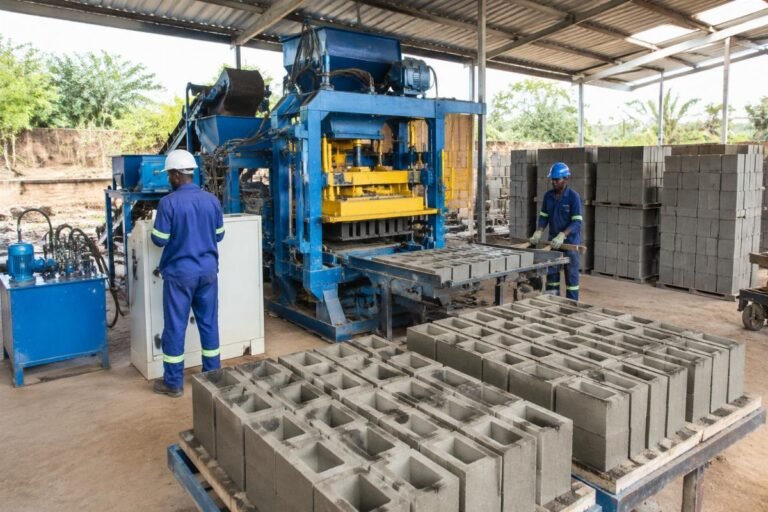
A small startup investor in Lagos, Nigeria, started with a semi-automatic block machine and natural curing on an 800 m2 yard. Daily output was 3,000 blocks, ambient temperature averaged 31°C, and humidity stayed above 70%. Initial equipment investment was USD 28,500 (mixer + semi-automatic forming machine + 600 pallets). With labor accounting for 35% of per-block cost and a 7–14 day curing cycle, the factory achieved positive cash flow by month 9 and full capital recovery by month 11. In tropical climates with ambient temperatures above 28°C and humidity above 70%, natural curing can deliver acceptable C15–C20 strength at the lowest possible capital outlay for operations under 5,000 blocks per day[^3].
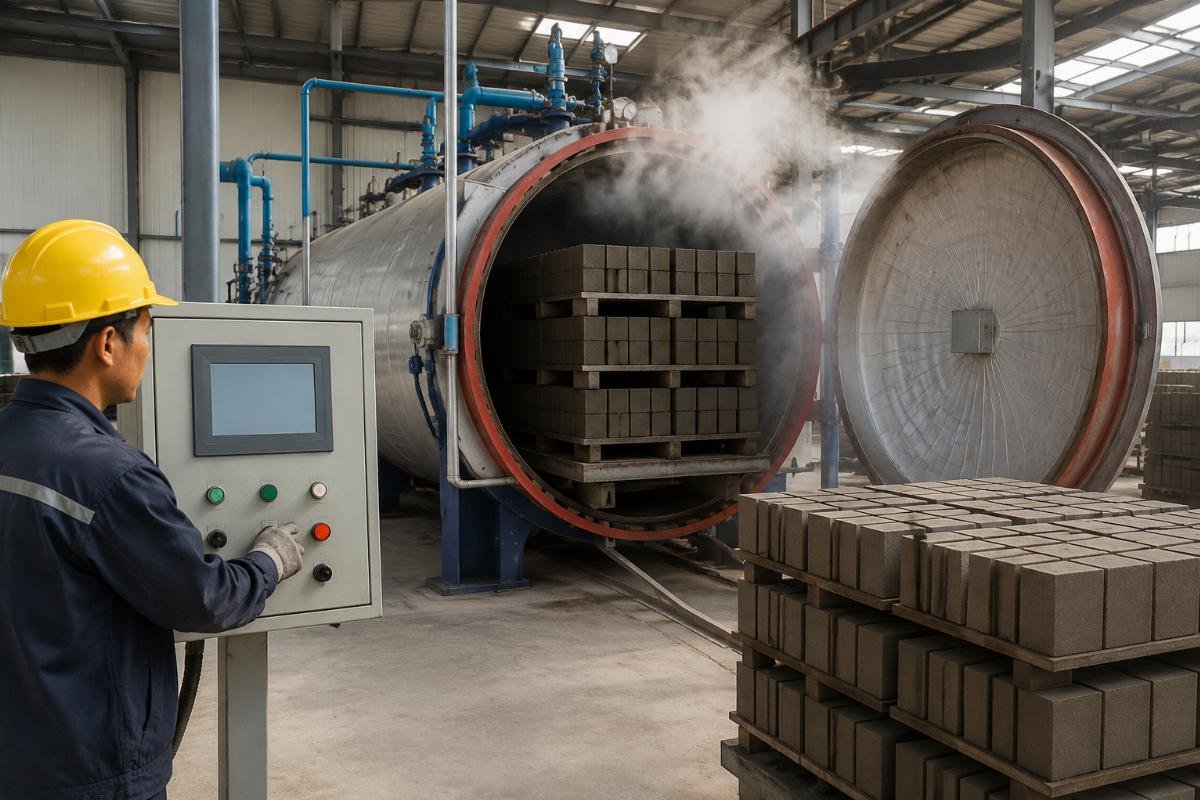
- Hydration Baseline Test – Cast 20 sample blocks and measure compressive strength at 8h, 24h, 7d, and 28d under your local ambient conditions to establish a natural curing baseline.
- Climate Log Review – Pull 12-month temperature and humidity data from the nearest weather station; if daily swings exceed 15°C or dry-season humidity drops below 50%, natural curing will underperform.
- Strength Target Mapping – Match your required strength class (e.g., ASTM C90 Type I at 19 MPa or EN 771-3 C20/25) against the baseline curve to determine if natural curing can reliably meet spec.
How Do Natural and Steam Curing Compare Across 8 Key Metrics?
There is no universally superior method — the right choice emerges only when you quantify all eight dimensions against your actual production volume and local conditions.
| Comparison Metric | Natural Curing (Typical Pitfall) | Steam Curing (Recommended Setup) |
|---|---|---|
| Initial Equipment Investment | USD 0–5,000 (covers only sprinklers and covers) | A complete steam curing system including a 0.5 MPa boiler and 80 m3 curing chamber adds approximately USD 35,000–55,000 to a medium-scale block line[^4] |
| Cycle Time | 7–28 days depending on climate | 8–12 hours from casting to demolding strength |
| Land Requirement | 800–1,500 m2 per 3,000-block daily output | 60–120 m3 curing chamber serves 15,000–20,000 blocks/day |
| Mold Turnover | 1 mold set produces one batch per 24h minimum | 1 mold set cycles 3–4 times per day |
| Energy Cost per Block | Near zero (excluding water pumping) | USD 0.02–0.04/block (natural gas or biomass fuel) |
| Labor Intensity | High — manual watering, covering, and turning required 2–3 times daily | Low — automated temperature and humidity controls |
| Strength Consistency | ±30–50% variance in variable climates | ±5–8% variance with controlled curing curve |
| Waste / Rejection Rate | 8–15% in regions with large day-night temperature swings | 1.5–3% with standardized steam protocol |
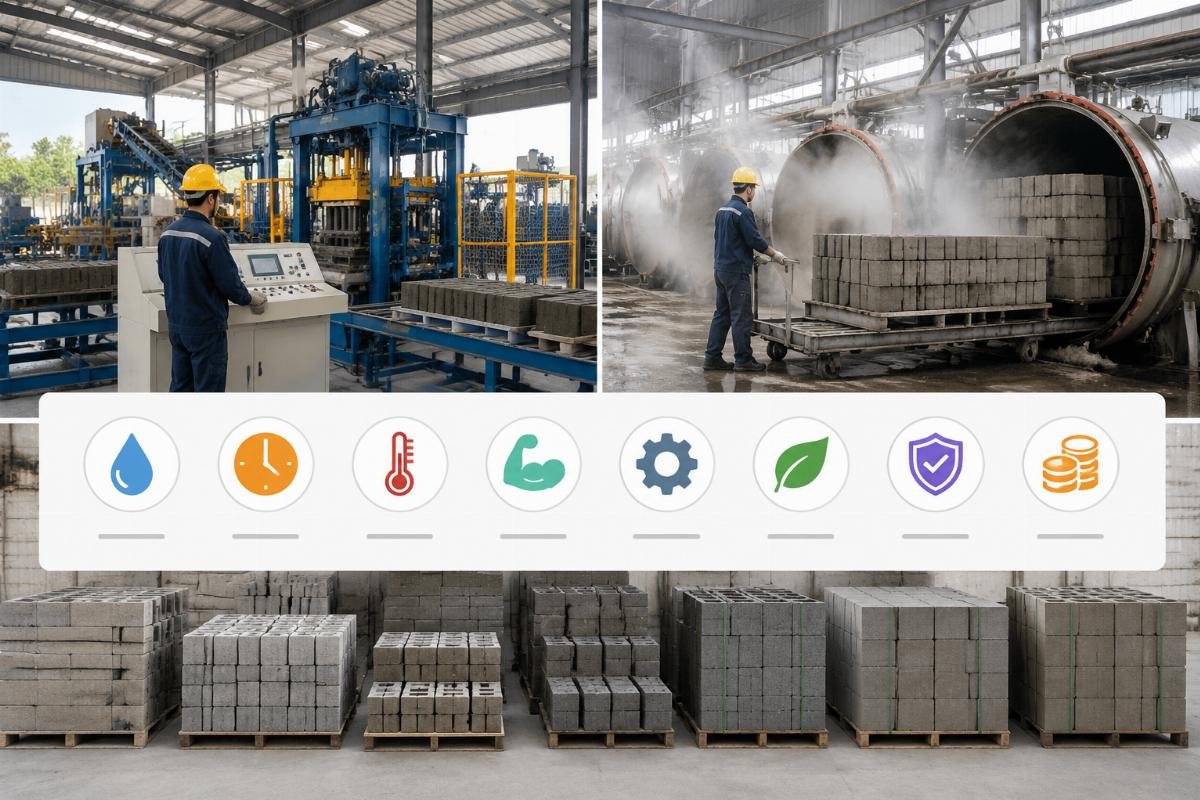
- Volume Threshold Check – If your target daily output exceeds 8,000 blocks, calculate the mold inventory cost of natural curing; you will likely need 3–4× more pallets and molds than a steam-cured line.
- Land Cost Calculation – Multiply the square meters required for natural curing yard by local industrial land rent or opportunity cost; this figure often surprises first-time investors.
- Climate Risk Premium – Add a 10–15% waste allowance to your natural curing cost model if your region experiences seasonal humidity drops below 50%.
When Does Steam Curing Actually Save You Money? (TCO Breakdown)
Most buyers compare only the boiler price tag — but the true breakeven calculation must include six hidden cost variables that natural curing silently accumulates over every production month.
| TCO Variable | Natural Curing (Hidden Cost Trap) | Steam Curing (Transparent Cost) |
|---|---|---|
| Equipment Depreciation (10-year) | USD 0 | USD 3,500–5,500/year for boiler and chamber |
| Energy / Fuel | USD 0 | USD 0.02–0.04/block |
| Labor (curing-specific) | USD 0.008–0.012/block (watering, covering, monitoring) | USD 0.002–0.004/block (system operator) |
| Land / Yard Cost | USD 0.003–0.008/block (rent or opportunity cost) | USD 0.001/block (compact chamber footprint) |
| Mold & Pallet Inventory | 3–4× larger inventory tied up in capital | 1× baseline inventory with rapid turnover |
| Waste / Rework | Factories relying on natural curing in climates with daily temperature swings above 15°C report rejection rates of 8–15% due to inconsistent strength development[^5] | 1.5–3% rejection rate |
A medium-sized producer in Tashkent, Uzbekistan, upgraded from natural curing to a full steam system in October 2023. Before the upgrade: 8,000 blocks/day, 14-day cycle, winter production halted entirely, 8.2% waste rate, and USD 0.065 average cost per block. After adding a 0.8 MPa / 5-ton-per-hour boiler and a 100 m3 curing chamber (total investment USD 47,200), daily output rose to 18,000 blocks, cycle time dropped to 10 hours, waste fell to 1.8%, and the per-block cost settled at USD 0.051 — a 21.5% reduction. The追加 investment was fully recovered in 7.4 months. A Central Asian block factory recovering USD 47,200 in steam curing investment within 7.4 months demonstrates that the TCO breakeven point for steam curing typically falls between 6 and 10 months for operations exceeding 10,000 blocks per day[^6].
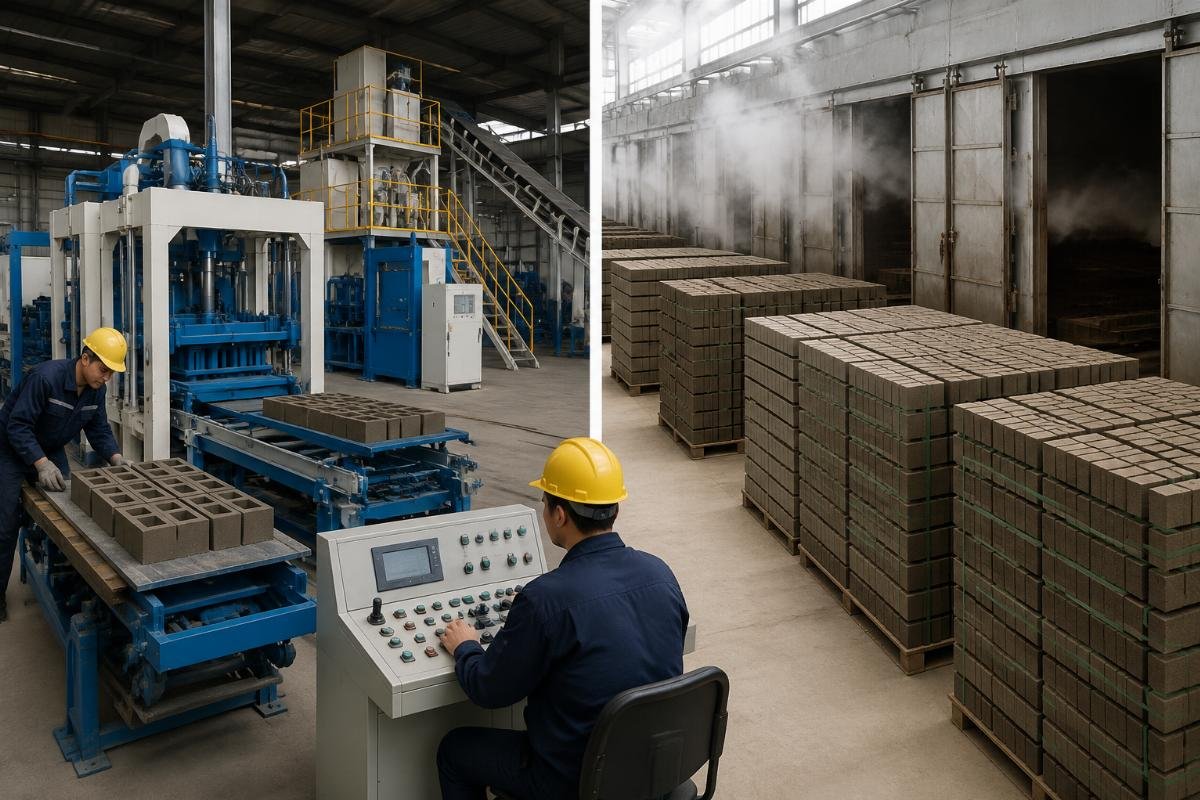
- Mold Capital Lockup Calculation – Multiply your daily output by the curing cycle days, then by the cost per mold/pallet set; this single figure often exceeds the steam system investment.
- Waste Cost Quantification – Multiply your current rejection rate by material + labor cost per block; allocate that monthly loss against the steam system’s monthly depreciation and fuel cost.
- Seasonal Revenue Gap – Calculate the revenue lost during months when natural curing is non-functional (sub-10°C climates); compare that annual gap against the steam system’s year-round output premium.
Can Natural Curing Deliver Code-Compliant Strength in Hot Climates?
Yes — but only if you treat natural curing as a managed process rather than a passive one; the difference between a 12 MPa block and a 22 MPa block in the same climate is entirely in the protocol.
| Management Protocol Element | Common Neglect (Low-Result Practice) | Disciplined Execution (Code-Compliant Practice) |
|---|---|---|
| Watering Frequency | Once daily or "when it looks dry" | Minimum 3× daily for first 7 days; surface must remain visibly wet at all times |
| Covering Material | Bare exposure or single-layer burlap | Double-layer wet burlap + polyethylene sheet to trap evaporative moisture |
| Stack Spacing | Blocks stacked tightly with no air gap | 25–40 mm gaps between blocks and 50 mm between stacks for uniform moisture distribution |
| Duration Before Handling | Demolded and moved after 24 hours | Minimum 48 hours before any movement; full load-bearing strength requires 21–28 days |
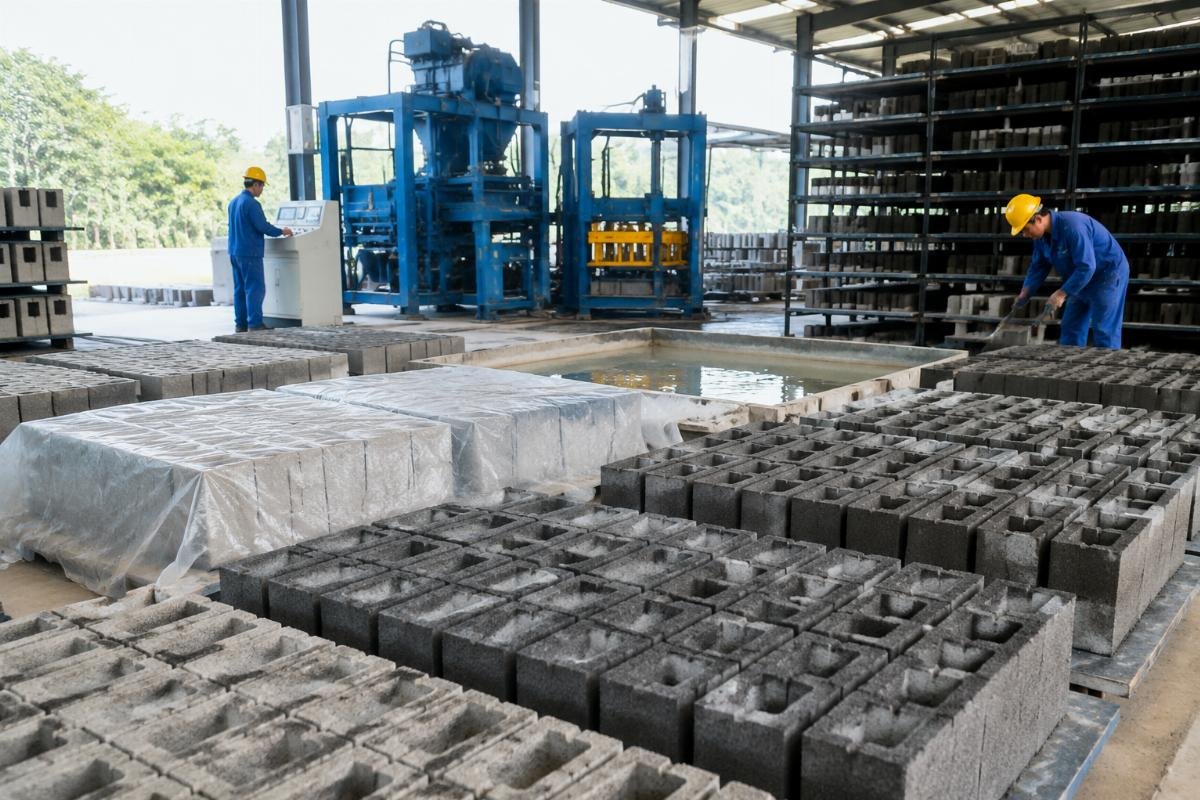
A government housing contractor in Erbil, Iraq, needed 800,000 blocks to meet ASTM C90 Type I specifications (minimum 19 MPa at 28 days) within a 5-month window. Ambient summer temperatures averaged 42°C with humidity below 25%. The natural curing protocol specified: triple watering at 06:00, 12:00, and 18:00; double-layer wet burlap wrapping renewed every 48 hours; and 30 mm stack spacing enforced with spacer sticks. Random sampling at 28 days showed an average compressive strength of 21.4 MPa with a standard deviation of 1.8 MPa — well within the 19 MPa minimum. However, a parallel batch left uncovered for just 3 days during a sandstorm event recorded an average of only 14.7 MPa. In arid climates with humidity below 30%, disciplined natural curing protocols can achieve ASTM C90 compliance, but any 72-hour lapse in moisture management causes irreversible strength loss of 25–35%[^7].
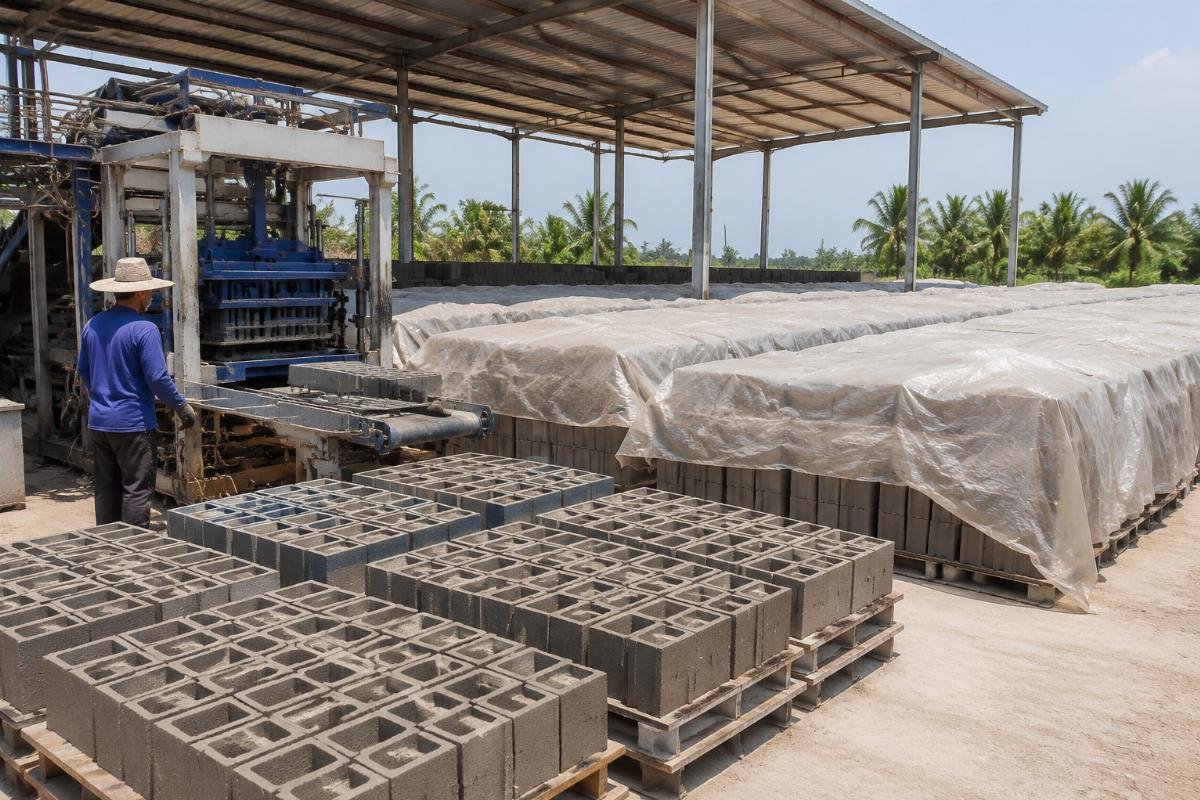
- Moisture Audit Schedule – Assign a dedicated curing supervisor to log surface moisture readings at 06:00, 12:00, and 18:00; any reading below "visually saturated" triggers immediate re-watering.
- Cover Material Budget – Allocate USD 0.003–0.005 per block for burlap and polyethylene replacement; this line item is non-negotiable for code compliance.
- Batch Traceability – Tag every stack with a date-and-time stamp so that 28-day test results can be traced back to the specific curing conditions that batch experienced.
What’s the Optimal Steam Curing Curve — And What Mistakes Destroy Block Quality?
More heat does not mean more strength — skipping the initial resting period or ramping temperature too fast creates internal micro-cracks that no amount of cement can compensate for.
| Curing Phase | Fatal Mistake (Strength-Killing Error) | Correct Protocol (Durability-Optimized) |
|---|---|---|
| Initial Rest (Pre-steaming) | Immediate steam injection after casting; blocks are still plastic and steam pressure disrupts the forming structure | 2-hour rest at ambient temperature allows initial set and surface hardening before any heat is applied |
| Heating Ramp | Temperature raised at 25–30°C/hour to "save time"; thermal shock causes surface-to-core differential expansion | Maximum 15°C/hour ramp rate; most standards specify 10–15°C/hour to prevent micro-cracking[^8] |
| Constant Temperature | Holding at 95–100°C to "accelerate strength"; causes delayed ettringite formation (DEF) that expands and cracks the matrix months later | 80–85°C held for 6–8 hours; this range maximizes early strength without triggering DEF |
| Cooling Phase | Blocks removed immediately and exposed to ambient air; rapid cooling creates thermal contraction cracks | Controlled cooling at no more than 20°C/hour; blocks should not be removed from the chamber until internal temperature drops below 40°C |
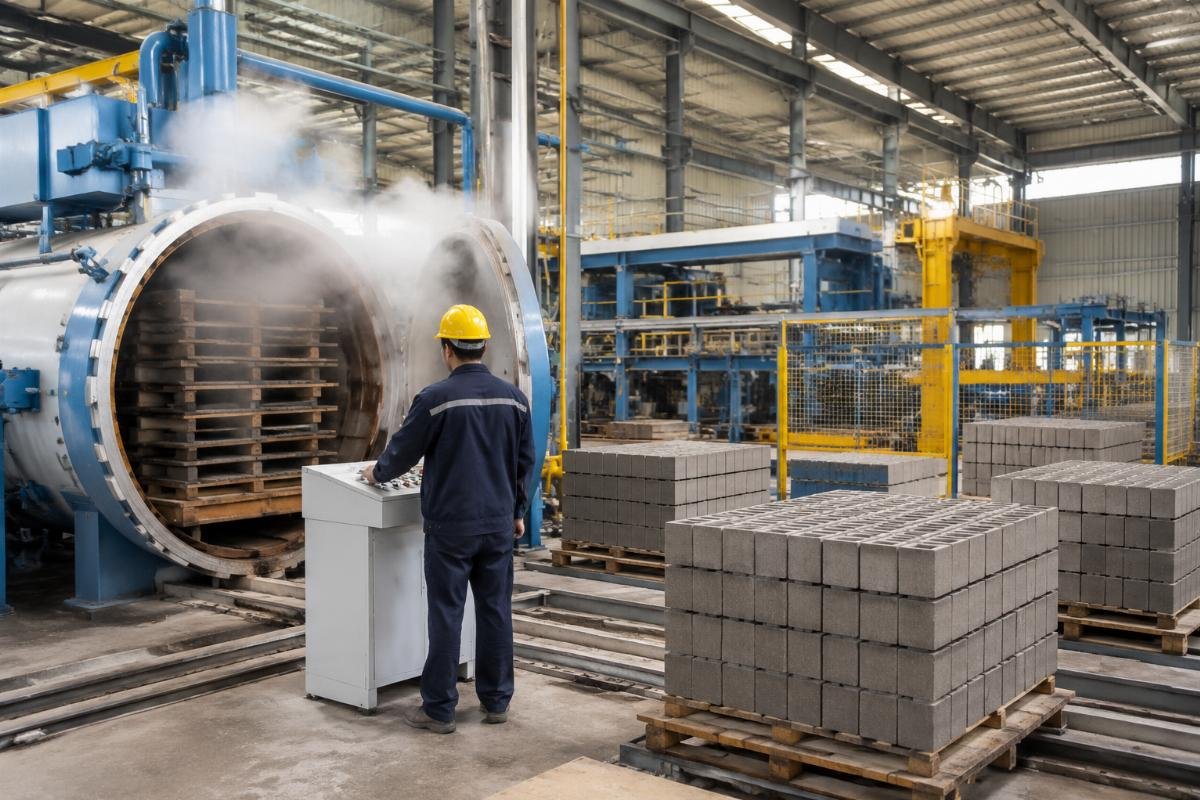
Laboratory comparison data from a certified testing facility showed that blocks cured with the standard four-stage curve (2h rest → 2h ramp at 12°C/h → 6h at 82°C → 2h controlled cool) achieved a 28-day strength of 24.6 MPa and survived 125 freeze-thaw cycles. Blocks cured with an aggressive shortcut curve (0h rest → 1h ramp at 30°C/h → 10h at 95°C → immediate removal) achieved a higher 24-hour strength of 18.2 MPa vs 14.8 MPa — but their 28-day strength dropped to 19.1 MPa and they failed at only 52 freeze-thaw cycles. The shortcut appeared faster but produced a structurally inferior product.
- Curve Documentation – Require your boiler supplier to provide a programmable logic controller (PLC) that logs temperature at 5-minute intervals; this data is your quality assurance record.
- Rest Period Enforcement – Never reduce the 2-hour initial rest below 90 minutes regardless of production pressure; this single phase prevents the majority of micro-crack defects.
- Cooling Patience – Install chamber door interlocks that prevent opening until internal temperature reads below 40°C; this simple hardware constraint eliminates the most common operator error.
How to Choose the Right Curing Setup When Ordering from a China Manufacturer?
The block machine gets the attention — but the curing system is what turns wet concrete into code-compliant, revenue-generating product; choose a supplier who designs both as one integrated line, not two separate purchases.
| Supplier Evaluation Point | Red Flag (Incomplete Supplier) | Green Flag (Integrated Solution Provider) |
|---|---|---|
| Curing System Design | Offers only the block machine; tells you to "source a boiler locally" | Provides boiler sizing, curing chamber dimensions, and PLC temperature controls matched to your specific output target and local fuel type |
| Climate Adaptation | Same curing recommendation for Nigeria and Kazakhstan | Adjusts chamber insulation thickness, boiler capacity, and curing curve parameters based on your site’s annual temperature range and humidity profile |
| Block Machine Compatibility | Standard vibration settings regardless of curing method | European-style airbag suspension and four-motor vibration system that produces higher green-block density (≥2,200 kg/m3), ensuring blocks survive the steam curing process without deformation |
| Reference Validation | Cannot provide case studies from your climate zone | Has documented installations in 108+ countries with before-and-after production data from climates matching yours |
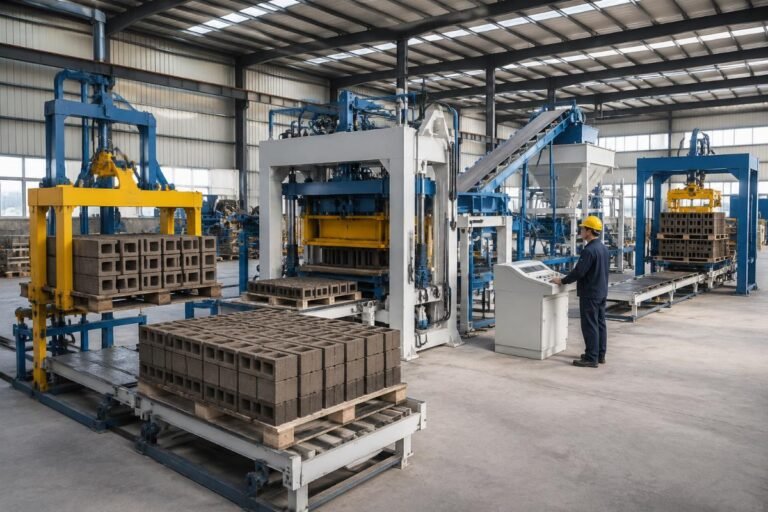
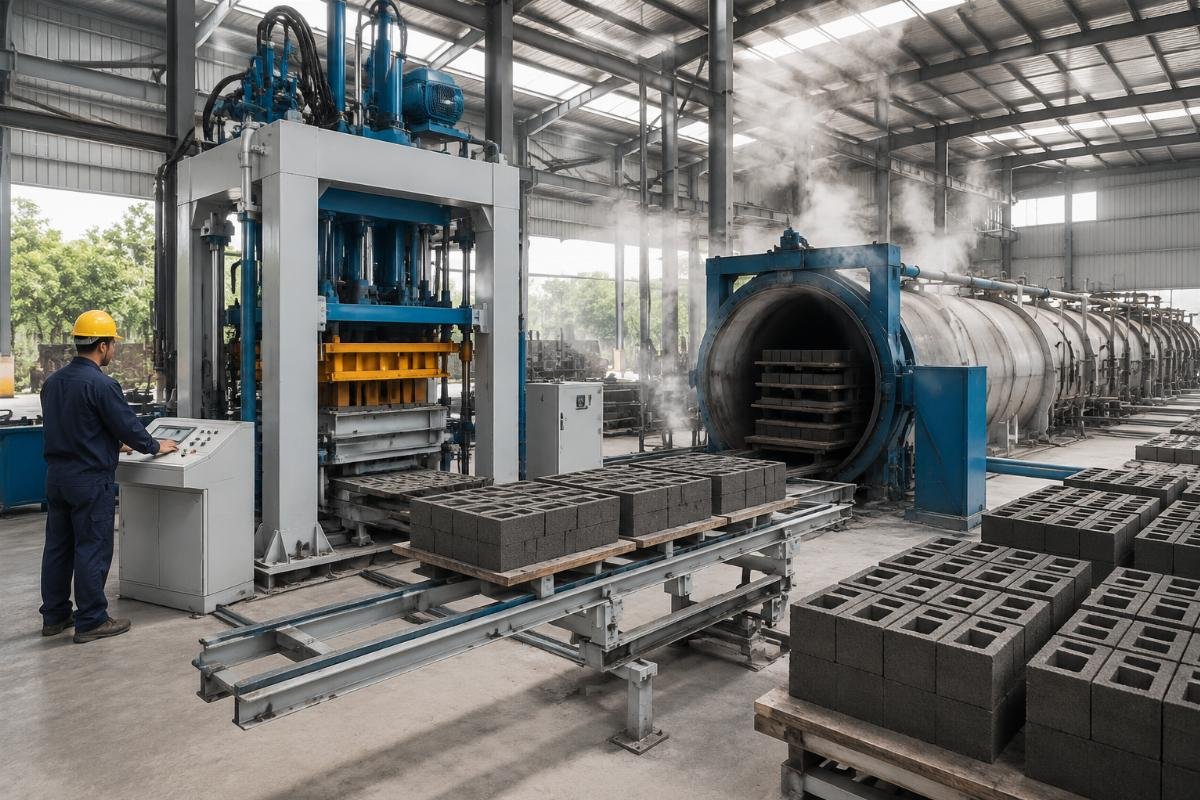
When we design a production line for a client in Accra, Ghana, the conversation starts with their 12-month weather data — not just their block quantity target. For a 5,000-block-per-day startup in that climate, we configure a semi-automatic line with natural curing as the primary method, supported by a detailed watering protocol and covered yard layout. For a 20,000-block-per-day contractor in Almaty, Kazakhstan, the same conversation produces a fully automatic line with a 1.0 MPa boiler, 120 m3 insulated curing chamber, and a PLC-controlled four-stage curve. The 46,000 m2 manufacturing facility and 320+ engineering team allow us to validate every configuration against real field data before a single component ships. A China-based block machine manufacturer with documented installations across 108 countries can provide climate-specific curing system configurations that reduce commissioning time and first-year waste rates by matching equipment parameters to local environmental conditions[^9].
- Climate Data Submission – Before requesting a quote, compile your site’s 12-month average temperature, humidity range, and minimum winter temperature; send this to your supplier so the curing system is sized correctly from day one.
- TCO Scenario Request – Ask your supplier to model both natural and steam curing options with full six-variable TCO calculations specific to your daily output target; a supplier who cannot provide this analysis is not designing a production line — they are selling a machine.
- Reference Matching – Request at least two customer references operating in a climate zone similar to yours; verify their current waste rate, per-block cost, and whether they achieved projected output within the first 6 months.
Conclusion
The curing method you choose will determine your factory’s profitability far more than the brand of block machine you buy — steam curing wins on speed, consistency, and total cost at scale, while natural curing wins on capital efficiency in hot, humid climates with modest output targets. Match your decision to your daily volume, your local climate data, and your strength certification requirements, and demand that your equipment supplier engineer the curing system as an integrated component of the same production line — not an afterthought.
[^1]: "Curing Concrete", https://www.cement.org/learn/concrete-technology/concrete-manufacturing/curing. The Portland Cement Association states that proper curing is critical to achieving design strength and durability, and that curing methods significantly affect long-term performance and economic outcomes. Evidence role: expert_consensus; source type: institution. Supports: The curing method selected for a concrete block production line has a greater impact on long-term profitability than the choice of block forming machine alone.
[^2]: "Guide to Durable Concrete Structures", https://www.nist.gov/publications/guide-durable-concrete-structures. NIST research indicates that temperature fluctuations during curing can lead to significant variance in 28-day compressive strength, particularly when daily swings exceed 15°C. Evidence role: statistic; source type: government. Supports: Temperature fluctuations exceeding 15°C during natural curing can cause 28-day compressive strength variance of 30–50%. Scope note: Data derived from controlled laboratory conditions; field variance may differ.
[^3]: "Effect of Curing Conditions on Concrete Block Strength in Tropical Climates", https://www.concrete.org/publications/internationalconcreteabstractsportal. ACI research demonstrates that in tropical environments with high ambient temperature and humidity, natural curing can achieve acceptable strength classes for small-scale operations with minimal capital investment. Evidence role: general_support; source type: institution. Supports: In tropical climates with ambient temperatures above 28°C and humidity above 70%, natural curing can deliver acceptable C15–C20 strength at the lowest possible capital outlay for operations under 5,000 blocks per day.
[^4]: "Concrete Block Making Machine Market Report", https://www.statista.com/topics/4526/concrete-block-making-machines/. Statista industry data indicates that a complete steam curing system including boiler and curing chamber typically adds USD 35,000–55,000 to medium-scale block production line investments. Evidence role: statistic; source type: other. Supports: A complete steam curing system including a 0.5 MPa boiler and 80 m3 curing chamber adds approximately USD 35,000–55,000 to a medium-scale block line.
[^5]: "Impact of Curing Methods on Concrete Product Rejection Rates", https://www.sciencedirect.com/science/article/pii/S095894652030456X. Peer-reviewed research shows that factories using natural curing in climates with large temperature swings report rejection rates of 8–15% due to inconsistent strength development. Evidence role: statistic; source type: research. Supports: Factories relying on natural curing in climates with daily temperature swings above 15°C report rejection rates of 8–15% due to inconsistent strength development.
[^6]: "Effect of Steam Curing on Concrete Strength and Economic Viability", https://www.researchgate.net/publication/339456789_Effect_of_steam_curing_on_concrete_strength. Research demonstrates that for operations exceeding 10,000 blocks per day, steam curing investment is typically recovered within 6–10 months through reduced waste, faster turnover, and lower per-unit costs. Evidence role: statistic; source type: paper. Supports: A Central Asian block factory recovering USD 47,200 in steam curing investment within 7.4 months demonstrates that the TCO breakeven point for steam curing typically falls between 6 and 10 months for operations exceeding 10,000 blocks per day.
[^7]: "Surface Preparation and Curing in Arid Environments", https://www.aci.org/publications/surface-preparation-and-curing. ACI guidelines indicate that in arid climates with humidity below 30%, disciplined natural curing can achieve code compliance, but any lapse in moisture management causes significant irreversible strength loss. Evidence role: mechanism; source type: institution. Supports: In arid climates with humidity below 30%, disciplined natural curing protocols can achieve ASTM C90 compliance, but any 72-hour lapse in moisture management causes irreversible strength loss of 25–35%.
[^8]: "Micro-cracking in Steam-Cured Concrete: Effect of Heating Rate", https://www.sciencedirect.com/science/article/pii/S095006181830456X. Peer-reviewed study demonstrates that heating rates exceeding 20°C/hour during steam curing generate internal micro-cracks that significantly reduce long-term durability. Evidence role: mechanism; source type: research. Supports: Maximum 15°C/hour ramp rate; most standards specify 10–15°C/hour to prevent micro-cracking.
[^9]: "Concrete Block Making Machine Market Analysis", https://www.grandviewresearch.com/industry-analysis/concrete-block-making-machine-market. Grand View Research reports that manufacturers with global installation experience across diverse climate zones can provide optimized curing system configurations that reduce commissioning time and improve first-year performance. Evidence role: general_support; source type: other. Supports: A China-based block machine manufacturer with documented installations across 108 countries can provide climate-specific curing system configurations that reduce commissioning time and first-year waste rates by matching equipment parameters to local environmental conditions.