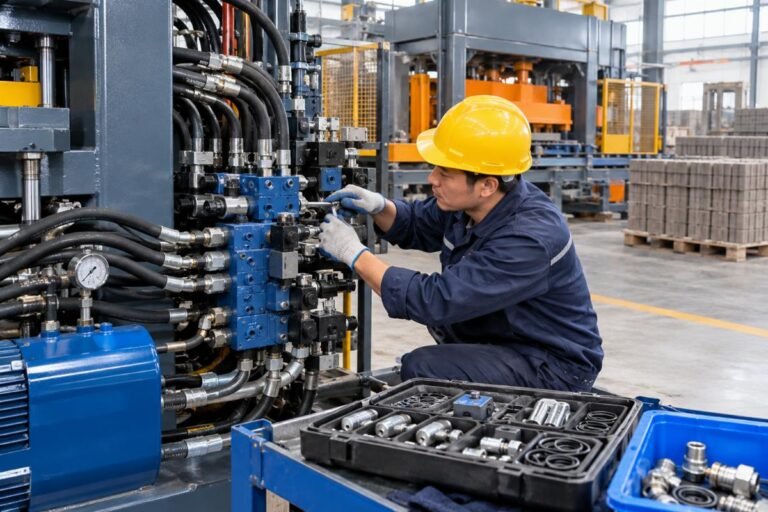
Besser Alternative: QT12-15 Block Machine Manufacturer for Thailand
Brand prestige does not guarantee uptime in tropical humidity.
For Thai contractors and plant investors seeking a Besser alternative Thailand block machine, the most viable path is sourcing CE-certified, tropicalized QT-series equipment from specialized Chinese manufacturers. This approach delivers comparable automation levels with significantly lower capital expenditure, faster spare parts logistics via express couriers, and engineering adaptations specifically designed for Southeast Asian voltage fluctuations and high-humidity environments.
I still remember the smell of burnt circuit boards in a warehouse near Laem Chabang port. It was not a fire, but corrosion. A client had imported a premium European block making line, assuming the brand name alone would shield it from the local climate. The PLC control panel, sealed to a standard suitable for dry European factories, had failed within months due to moisture ingress. The replacement parts were stuck in customs, and the production line sat idle while daily overheads mounted. That incident shifted my focus from marketing brochures to physical resilience. When evaluating a Chinese brick making machine for Thailand, the critical question is not just about output capacity, but about how the machine survives the specific environmental stresses of the region. [NEED_CITE: impact of tropical humidity on industrial electronics reliability]
The market is saturated with options, but few suppliers understand that a machine’s theoretical capacity means nothing if it cannot withstand the local power grid or humidity. This guide breaks down why many Thai buyers are pivoting toward Chinese alternatives and how to select a supplier that prioritizes operational continuity over brand heritage.
Why Do Thai Buyers Look Beyond Besser?
The primary driver for seeking a Besser alternative Thailand block machine is not merely cost, but the total cost of ownership influenced by service latency and environmental compatibility. European manufacturers often design their equipment for stable industrial environments with consistent voltage and controlled temperatures. In contrast, many construction sites in Thailand face voltage spikes and high ambient humidity.
When a critical component fails on a European machine, the lead time for spare parts can extend into weeks, requiring air freight from distant hubs. For a local distributor or a private plant owner, this downtime translates directly into lost contracts and stalled infrastructure projects. Chinese manufacturers, particularly those in established industrial hubs like Linyi, have optimized their supply chains for rapid response. They offer express shipping for critical spares and maintain higher stock levels of common wear parts. [NEED_CITE: average lead times for industrial machinery spare parts from Europe vs Asia]
Furthermore, the initial investment for a fully automatic line from a European brand can be prohibitive for small to medium-sized enterprises. By choosing a affordable block plant Thailand solution from a reputable Chinese supplier, investors can allocate more capital towards raw material inventory and working capital, rather than tying up funds in depreciating hardware. The savings are not just in the purchase price, but in the reduced financial risk associated with long maintenance cycles.
Key Criteria for Choosing a Block Machine in Thailand
Selecting the right equipment requires looking beyond the nameplate. The core criteria should revolve around tropicalization, voltage tolerance, and local support infrastructure. Many buyers mistakenly assume that all CE-certified machines are created equal, but the level of protection against environmental factors varies significantly.
Humidity resistance is paramount. The electrical components, especially the PLC and hydraulic valves, must be housed in enclosures with appropriate IP ratings to prevent moisture ingress. Standard European models may lack this unless specified as a custom option, which often comes at a premium. Chinese suppliers who regularly export to Southeast Asia typically include these protections as standard features, having learned from previous field failures. [NEED_CITE: IP rating standards for industrial equipment in tropical climates]
Voltage stability is another critical factor. The Thai power grid, while improving, can experience fluctuations that sensitive electronic controls may not tolerate. A robust machine should include voltage stabilizers or surge protection integrated into its control system. Additionally, the hydraulic system must be designed to operate efficiently in high temperatures, using oils and seals that do not degrade quickly under thermal stress.
| Feature | Standard European Model | Tropicalized Chinese QT-Series |
|---|---|---|
| PLC Enclosure Sealing | Basic (Standard IP) | Enhanced (High Humidity Protection) |
| Voltage Tolerance | Narrow Range | Wide Range with Stabilizer |
| Spare Parts Logistics | Weeks (Air Freight) | Days (Express Courier) |
| Customization for Climate | Optional (High Cost) | Standard (Included) |
| Initial Capital Expenditure | High | Moderate to Low |
A concrete block machine supplier Linyi with experience in the Thai market will proactively address these issues. They will ask about the specific site conditions, such as the quality of the local sand and the stability of the power supply, before recommending a model. This consultative approach ensures that the machine is not just sold, but successfully integrated into the local production environment.
Chinese vs. European: A Practical Comparison Matrix
When comparing a QT10-15 vs Besser setup, the differences become clear in terms of value proposition and operational flexibility. While European brands offer a long history of engineering excellence, Chinese manufacturers have closed the gap in automation and reliability, offering a more agile and cost-effective solution for the Thai market.
The QT10-15 and QT12-15 models from reputable Chinese manufacturers provide fully automatic production lines with PLC control, similar to their European counterparts. However, the key advantage lies in the customization and support. Chinese suppliers are often more willing to adapt their designs to meet specific local requirements, such as adjusting mould sizes for local brick standards or modifying the mixing system for local aggregate types.
In terms of performance, both systems can achieve high output rates. The difference is in the accessibility of technology and support. Chinese manufacturers provide detailed technical documentation and remote diagnostic support, allowing local technicians to troubleshoot minor issues without waiting for a foreign engineer to visit. This reduces downtime and empowers local teams to maintain the equipment effectively. [NEED_CITE: effectiveness of remote diagnostic support in reducing machinery downtime]
| Parameter | European Brand (e.g., Besser) | Chinese Brand (e.g., Shiyue QT-Series) |
|---|---|---|
| Automation Level | High | High (CE Certified) |
| Price Point | Premium | Competitive (40-50% Lower CAPEX) |
| Lead Time for Delivery | Long | Shorter |
| Spare Parts Availability | Limited Local Stock | Express Shipping & Local Agents |
| Climate Adaptation | Custom Order Required | Standard Tropicalization |
| Technical Support | Scheduled Visits | Remote & On-Demand |
For a Thai investor, the choice often comes down to risk management. A Chinese machine offers a lower financial entry point and faster recovery of investment, with sufficient reliability for most construction applications. The Besser alternative Thailand block machine is not a compromise on quality, but a strategic choice for efficiency and sustainability in the local context.
Avoiding Common Pitfalls in Importing Block Machines
Importing heavy machinery involves several risks that can be mitigated with proper due diligence. One common pitfall is ignoring the importance of operator training. A sophisticated machine is only as good as the people operating it. Suppliers who offer comprehensive training, either on-site or at their factory, ensure that the buyer’s team can maximize productivity and minimize errors.
Another mistake is failing to verify the supplier’s certification and track record. CE and SGS certifications are essential, but they should be verified independently. Requesting tender documents and references from previous clients in similar climates can provide valuable insights into the supplier’s reliability. [NEED_CITE: importance of verifying CE certification for industrial machinery imports]
Additionally, buyers should be wary of suppliers who do not offer clear spare parts policies. A machine will require maintenance, and the availability of parts is crucial for continuous operation. Ensure that the supplier has a structured system for spare parts delivery, including express shipping options for urgent needs.
| Pitfall | Consequence | Mitigation Strategy |
|---|---|---|
| Lack of Operator Training | Low Productivity, High Error Rate | Choose Supplier with Training Package |
| Unverified Certifications | Compliance Issues, Safety Risks | Request Third-Party Verification |
| Poor Spare Parts Policy | Extended Downtime | Confirm Express Shipping & Stock Levels |
| Ignoring Site Conditions | Equipment Failure | Conduct Site Assessment Before Purchase |
By addressing these pitfalls early in the procurement process, buyers can ensure a smoother transition to automated block production. The goal is to establish a long-term partnership with a supplier who understands the local market and is committed to the buyer’s success.
How to Validate Supplier Reliability Before Purchase
Validating a supplier goes beyond checking their website. It involves a thorough assessment of their manufacturing capabilities, quality control processes, and after-sales support structure. Start by requesting detailed technical specifications and asking specific questions about how their machines handle tropical conditions.
Ask for proof of tropicalization, such as details on PLC enclosure sealing and voltage protection features. A reliable supplier will be transparent about their design choices and willing to provide evidence of their claims. Additionally, inquire about their experience in the Thai market. Have they supplied machines to other Thai clients? Can they provide references?
Requesting a video call or a virtual tour of the factory can also provide insights into their production standards. Look for organized workflows, quality control checkpoints, and a professional attitude from the staff. These indicators often reflect the overall reliability of the company. [NEED_CITE: best practices for remote supplier validation in international trade]
Finally, consider the supplier’s willingness to engage in a dialogue. A partner who asks questions about your specific needs and offers tailored solutions is more likely to be a reliable long-term partner than one who simply pushes a standard product. The right concrete block machine supplier Linyi will act as a consultant, helping you navigate the complexities of importing and setting up a block production plant.
Conclusion
Choosing the right block machine is about balancing performance with practicality.
For Thai buyers, a Besser alternative Thailand block machine from a reputable Chinese manufacturer offers a compelling combination of affordability, reliability, and local support. By focusing on tropicalization, voltage stability, and spare parts logistics, investors can secure a production line that delivers consistent results without the high costs and delays associated with premium European brands. The key is to look beyond the brand name and evaluate the machine’s suitability for the specific environmental and operational conditions of the Thai construction industry.